
Permanent Solutions for Missing Teeth
If you are missing most or all of the teeth in an arch, full-arch dental implants can replace them with a fixed set of teeth anchored to your jawbone. The approach most people know as All-on-4 uses four to six implants to carry a complete arch, and in many cases a temporary set of teeth can be placed the same day. Dr. Cherry provides full-arch implant treatment at our Lone Tree practice, and sees patients from Castle Rock, Centennial, Highlands Ranch, Parker and the surrounding south Denver communities.
All-on-4 and Full-Arch Implants in Lone Tree
All-on-4 is a full-arch treatment rather than a single-tooth one. Instead of placing an implant for every missing tooth, four to six implants are positioned to support one bridge across the whole arch. That usually means fewer implants, less surgery and a lower total cost than replacing each tooth on its own. If only one tooth is missing, the relevant comparison is a single tooth implant versus a bridge. The angled placement used in this approach can also reduce the need for extensive bone grafting in some cases, though whether it suits you depends on your bone and your bite, which is what the consultation is for. If you are missing a single tooth, our single tooth dental implant page covers that option instead.
What are Dental Implants?
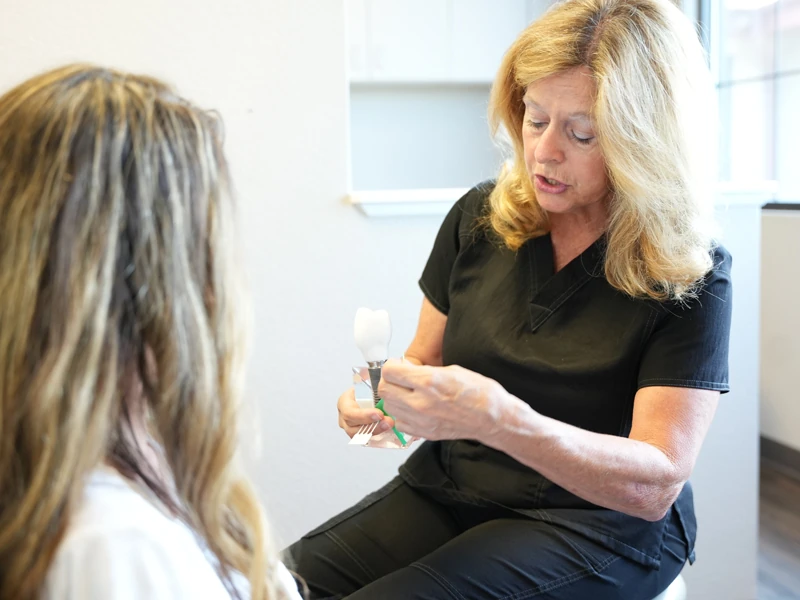
Dental implants are prosthetic tooth roots that are surgically inserted in the jawbone to support replacement teeth. They have three primary components:
- Implant:A tiny post that acts as the root of the new tooth.
- Abutment:A connector called an abutment links the implant to the crown.
- Crown:The crown is the visible part of the tooth that is custom-made to match your original teeth.
Benefits of Dental Implants
Health Benefits
- Prevent bone loss in the jaw
- Preserve facial structure
- Improve overall oral health
- Reduce the risk of gum disease and tooth decay in adjacent teeth
- Less invasive to teeth than alternative treatment options
Aesthetic Benefits
- Natural appearance indistinguishable from real teeth
- Boost confidence in your smile
- Improve speech clarity
Functional Benefits
- Enhanced chewing ability
- Greater comfort compared to removable dentures
- No dietary restrictions
- Same maintenance as natural teeth
Who is a Candidate for Dental Implants?
Most adults who have good general and oral health are eligible for dental implant surgery. An ideal candidate has:
- Healthy gums free from periodontal disease
- Adequate bone density to support the implant
- Good overall health without conditions that may impair bone healing
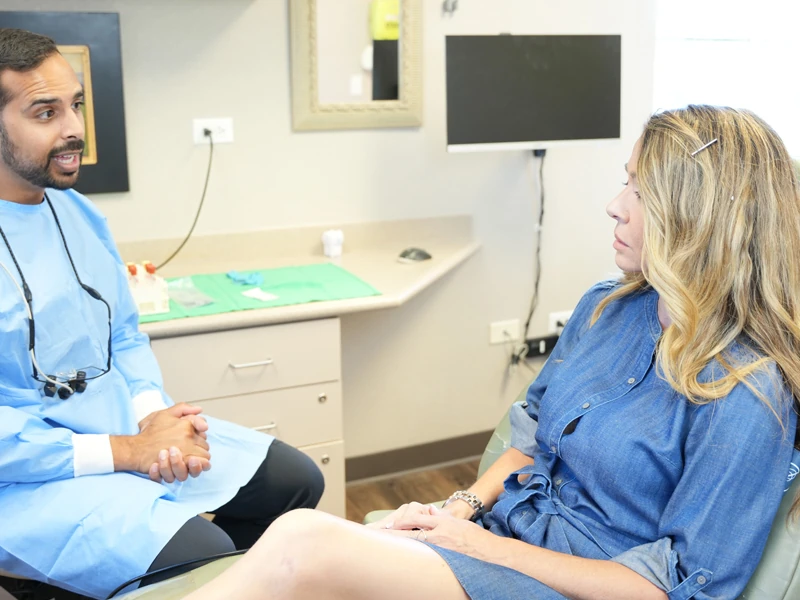
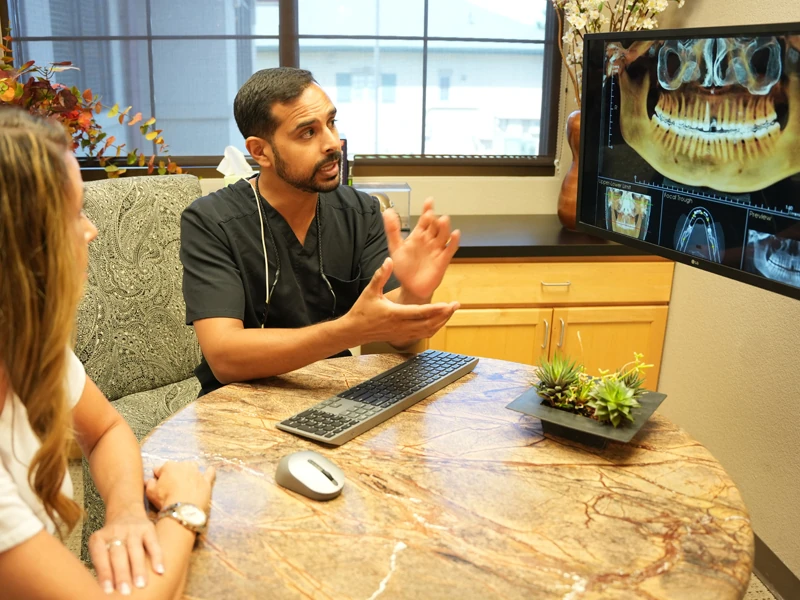
To evaluate your eligibility and create a customized treatment plan, your periodontist will carefully examine you on your first visit including X-rays and 3D scans.
Initial Consultation
- Assessment:Your periodontist will examine your mouth, take precise photographs of your jaw, and discuss your medical history.
- Planning:Based on the assessment, a customized treatment plan will be created about the type of implants you need from a single dental implant to full-arch restorations to meet your particular needs and goals.
Surgical Placement
- Procedure:The implant is positioned surgically into the jawbone. This is often performed under local anesthesia, which keeps you comfortable throughout the procedure.
- Anesthesia:Options may include local anesthesia, oral sedation, or IV moderate conscious sedation, depending on your preferences and the complexity of the procedure.
Many people find the implant placement itself more straightforward than they expected. The experience of our periodontists in this kind of surgery contributes a great deal to how smoothly the appointment goes.
Healing and Osseointegration
- Healing Process: osseointegration, the process by which the implant fuses with your jawbone, takes place over the next three to six months.
- Care Instructions: your periodontist will provide you with details on oral hygiene, food, and activities to ensure optimal healing.
Abutment and Crown Placement
Once healing is complete, you'll return to your general dentist for the final steps:
- Abutment Placement:The connector is joined to the implant in abutment placement.
- Crown Placement:To complete your new tooth, a custom-made crown is fitted and attached to the abutment.
The Importance of Bone Grafting for Tooth Implant Procedures
In cases when there is insufficient natural bone density, a bone graft is essential to guarantee the durability and success of dental implant surgeries. In order to provide a strong base for the implant, bone grafting is a necessary part of this procedure. The graft facilitates a secure and successful implant integration by improving the bone structure. When implants are planned in the upper back jaw, a sinus lift may also be recommended to create adequate bone height.
Insufficient bone support can lead to many issues for dental implants, such as compromised positioning, poor support structure, or need for future revisional surgeries. As a result, long-term success and preserving the structure of the jawbone depend on a bone graft. This process benefits general oral health in addition to maintaining the integrity of the implant.
Why Dental Implants for Front Teeth Offer Exceptional Aesthetics?
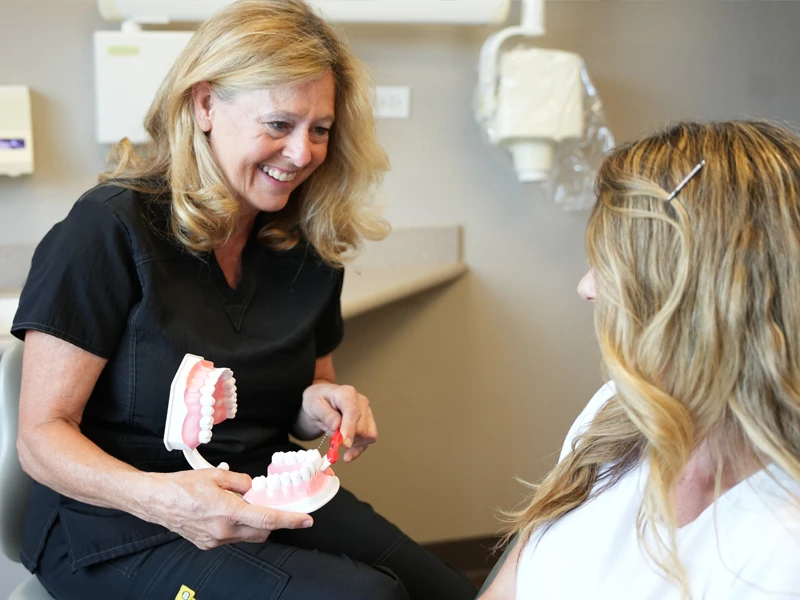
Because dental implants for front teeth are made to resemble real teeth as much as possible, they are an excellent option for restoring the looks of your smile. The size, color, and form of the custom-made crowns used in front tooth implants are designed to match your natural teeth, providing a seamless appearance.
Additionally, since dental implants are firmly screwed into place and do not interfere with neighboring teeth, they offer a more aesthetically pleasing option than traditional dentures or bridges. This gives you a self-assured, attractive smile that looks natural and improves your appearance overall while boosting your self-esteem.
Advantages Over Other Tooth Replacement Options

Compared to standard dentures and bridges, dental implants provide:
- Superior stability and comfort
- No impact on adjacent healthy teeth
- Easier maintenance and cleaning
- Longevity – with proper care, implants can last a lifetime
Cost and Financing Options

The cost of dental implant surgery varies depending on the following factors:
- Number of implants needed
- Complexity of the procedure
- Need for additional treatments (e.g., bone grafting)
Although dental implant surgery could be more expensive initially than other alternatives, the longevity and benefits usually make them a wise long-term investment. We also provide financing options to enable broader access to treatment. Consult our advisor to know more.
What to Expect for Comfort During Treatment

One of the most common concerns patients have about dental implants is the fear of pain. Most patients tell us afterwards that it was more manageable than they expected. Thanks to the advanced techniques we use and the expertise of our periodontists, the implant placement process is typically:
- Minimally invasive
- Performed under effective anesthesia
- Associated with quick recovery times
Many patients report that the procedure was much easier than they anticipated, often comparing it favorably to simpler dental procedures they have had in the past.
Common Questions
Frequently Asked Questions
How long do dental implants last?▸
With proper care and maintenance, dental implants can last a lifetime. The crown may need replacement after 10-15 years due to normal wear and tear.
Is the dental implant procedure painful?▸
Most patients report minimal discomfort during and after the procedure. Your periodontist will work to keep you comfortable throughout the process, and any post-operative pain can usually be managed with over-the-counter pain relievers.
How long does the entire process take?▸
The timeline can vary, but typically the process takes 3-6 months from initial consultation to final crown placement. This allows for proper healing and osseointegration.
Can dental implants fail?▸
The success rate of dental implant surgery is very high (over 95%!), failures can occur. Choosing a skilled periodontist significantly reduces this risk. Factors that can contribute to implant failure include smoking, poor oral hygiene, and certain medical conditions.
Why should I choose a periodontist for my dental implants?▸
Periodontists undergo extensive additional training specifically focused on the structures supporting teeth, including the jawbone and gums. This specialized expertise makes them uniquely qualified to place dental implants and manage any potential complications. Their advanced knowledge in tissue engineering and regeneration ensures the best possible outcomes for implant patients.
Full-Arch and Implant-Supported Options
For patients who have lost most or all of their teeth, full-arch implant solutions (often called All-on-4, All-on-6, All-on-X, or “teeth in a day”) offer a transformative option that combines the stability of dental implants with the convenience of a fixed, full-arch restoration. Unlike traditional dentures that rest on the gums and can slip or cause discomfort, implant-supported dentures are anchored securely to implants placed in the jawbone.
Fixed Full-Arch Implants (All-on-4 & All-on-X)
Permanently attached to 4 to 6 implants per arch (the approach commonly known as All-on-4 or All-on-6), fixed full-arch implants function like natural teeth. In many cases, a temporary set of teeth can be placed the same day. They do not need to be removed for cleaning and provide the strongest bite force of any denture option. This is the closest restoration to having your natural teeth back.
Removable Implant Dentures (Overdentures)
Snap-on overdentures attach to 2 to 4 implants via locator attachments. They can be removed for cleaning but remain securely in place during eating and speaking. This option is often more affordable while still providing dramatically better stability than conventional dentures.
Dr. Cherry will evaluate your bone density, oral health, and goals to recommend the implant denture solution that best fits your needs and budget.
Foundation Implants & Periodontics provides dental implants, All-on-4 full-arch restorations, and implant-supported dentures for patients across Lone Tree, Highlands Ranch, Parker, Centennial, and the greater south Denver area.
Related Reading
- All-on-X Implants: How Many Implants a Full Arch Actually Needs. How many implants a full arch needs.
- The Complete Guide to Dental Implants in Lone Tree: What to Expect from Consult to Crown. What to expect from consult to crown.