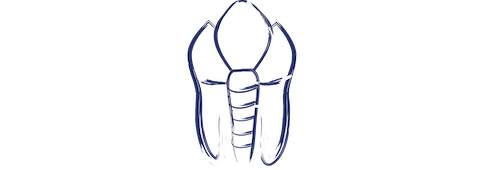
What is a Sinus Lift?
The maxillary sinuses sit directly above the back teeth of the upper jaw, separated from them by a thin floor of bone. When an upper molar or premolar is lost, the bone that once held it begins to shrink, and the sinus above tends to expand into the space left behind. Over time there can be too little bone left to hold an implant.
A sinus lift, also called sinus augmentation, solves that. The American Academy of Periodontology describes the procedure as raising the sinus floor and developing bone for the placement of dental implants. The membrane lining the sinus is gently lifted upward, and grafting material is placed underneath it. Over the following months that material is replaced by the patient’s own bone, restoring enough height to place an implant properly.
Why Choose Sinus Augmentation?
Patients are often told elsewhere that they do not have enough bone for an implant in the upper back jaw, and that a bridge or a partial denture is the only route left. That is frequently a statement about the bone available today rather than about what is possible.
Rebuilding the site first means the implant can be placed where the missing tooth actually was, at a proper angle and with bone around it on all sides. An implant placed into insufficient bone is working against the site for the rest of its life. Preparing the foundation is the difference between an implant that is possible and an implant that is well supported.
Sinus Lift Surgery Process
1. Consultation
Planning starts with three-dimensional imaging, because the amount of bone between the ridge and the sinus floor cannot be judged from a standard dental x-ray. That scan shows how much height is available, the shape and position of the sinus, and whether the lift can be combined with implant placement or needs to happen first. Dr. Cherry will go through the scan with you and explain which of those applies in your case.
2. Surgery
The procedure is carried out under local anesthetic, with sedation options available for patients who would prefer them. Access is made to the sinus, the membrane is carefully lifted clear, and grafting material is placed into the space created below it. The gum is then closed over the site. Most patients are surprised by how manageable the day itself is.
3. Recovery
Some swelling and congestion on the treated side is normal in the first few days. You will be given written aftercare instructions covering what to eat, how to keep the area clean, and what to avoid while the graft settles, including nose blowing, which puts pressure on the healing membrane. The graft then needs several months of undisturbed healing before it is solid enough to hold an implant. That waiting period is doing the actual work.
4. Implant Placement
Once the site has healed, imaging confirms the new bone height and the implant is placed. In cases where enough of the patient’s own bone was there to begin with, the lift and the implant can sometimes be done in the same appointment. Which route applies is decided from the scan, not assumed in advance. You can read more about what follows on our dental implants page.
Common Questions
Frequently Asked Questions
Why would I need a sinus lift before a dental implant?▸
The upper back jaw sits directly beneath the sinus cavity, and it is the thinnest bone in the mouth. When an upper molar has been missing for a while, that bone shrinks and there may not be enough height left to hold an implant. A sinus lift raises the sinus floor and adds bone so an implant has something solid to sit in.
Does a sinus lift hurt?▸
The procedure itself is done under local anaesthetic, and sedation options are available. Most patients describe the days afterwards as swelling and pressure rather than sharp pain, and manage it with over-the-counter medication. You are given written aftercare instructions before you leave.
How long after a sinus lift can the implant be placed?▸
The grafted bone usually needs several months to mature before it can support an implant. In some cases, where enough of your own bone remains, the graft and the implant can be done in the same visit. Which applies to you is decided from a scan, not from a general rule.
Who performs the sinus lift?▸
Dr. Cherry performs it himself. A sinus lift is periodontal surgery on the bone that supports teeth, which is the tissue a periodontist trains in for three years beyond dental school.
Is Sinus Augmentation Right for You?
A sinus lift is worth discussing if you are missing an upper back tooth, have been told there is not enough bone for an implant there, have worn a denture or partial in that area for years, or lost the tooth long enough ago that the site has had time to shrink.
It is not needed for every upper implant. Plenty of patients have ample bone and go straight to placement. The only way to know which group you are in is a scan. If you are weighing up options for replacing missing teeth and the upper back jaw is involved, this is the question to settle first.
Dr. Cherry is a periodontist in Lone Tree, Colorado, and treats patients from across the south Denver metro. To arrange an evaluation, contact the practice.
Related Reading
- All-on-X Implants: How Many Implants a Full Arch Actually Needs. Planning a full arch.
- The Complete Guide to Dental Implants in Lone Tree: What to Expect from Consult to Crown. The implant process end to end.