
Understanding Periodontal Disease

Periodontal disease — commonly known as gum disease — is a chronic bacterial infection that affects the gums and bone supporting your teeth. It is one of the most common health conditions in adults, affecting nearly half of Americans over the age of 30. Left untreated, periodontal disease leads to progressive bone loss and is the leading cause of tooth loss in adults.
The good news: periodontal disease is treatable at every stage, and with proper care, its progression can be stopped and much of the damage reversed.
What Causes Periodontal Disease?
Periodontal disease begins with bacterial plaque — a sticky film that constantly forms on your teeth. When plaque is not adequately removed through daily brushing and flossing, it hardens into tartar (calculus), which can only be removed by a dental professional. The bacteria in plaque and tartar produce toxins that irritate the gums, triggering an inflammatory response that gradually destroys the supporting bone and tissue.
Risk Factors
- Inadequate oral hygiene
- Smoking and tobacco use (the single greatest modifiable risk factor)
- Diabetes and other systemic conditions
- Genetic predisposition
- Hormonal changes (pregnancy, menopause)
- Certain medications that reduce saliva flow
- Stress, which impairs the immune response
Stages of Periodontal Disease
Gingivitis
The earliest stage of gum disease. Gums become red, swollen, and bleed easily during brushing or flossing. At this stage, no irreversible bone loss has occurred, and gingivitis can be fully reversed with professional cleaning and improved home care.
Mild to Moderate Periodontitis
As the disease progresses, bacteria penetrate below the gumline, forming pockets between the gums and teeth. Bone loss begins. Symptoms may include persistent bad breath, gum tenderness, and slight tooth mobility. Treatment at this stage typically involves scaling and root planing.
Advanced Periodontitis
Significant bone and tissue destruction has occurred. Teeth may become noticeably loose or shift position. Deep periodontal pockets harbor aggressive bacteria. Surgical intervention — such as osseous surgery or guided tissue regeneration — may be necessary to halt progression and restore stability.
Warning Signs
- Bleeding gums when brushing or flossing
- Red, swollen, or tender gums
- Persistent bad breath
- Receding gums or teeth appearing longer
- Loose or shifting teeth
- Changes in your bite
- Pus between gums and teeth
Many people with periodontal disease experience no pain in the early stages, which is why regular dental check-ups are critical for early detection.
Treatment Options
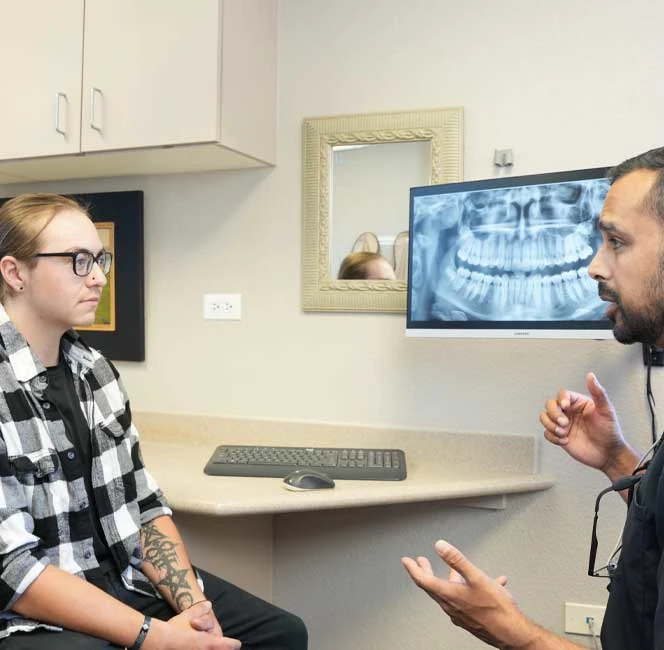
Foundation Implants & Periodontics offers the full spectrum of periodontal treatment, from non-surgical therapies like scaling and root planing to advanced surgical procedures including osseous/flap surgery and guided tissue regeneration. Dr. Cherry will develop a personalized treatment plan based on the severity of your condition and your individual health profile.
Take the First Step
If you’re experiencing any symptoms of gum disease — or if it’s been a while since your last periodontal evaluation — contact our office to schedule an appointment. Early intervention is the key to preserving your teeth and your health.